.png)
Is Your Thyroid Causing Fatigue, Weight Gain, or Mood Changes?

Updated: Feb 10

Thyroid disease can cause a range of seemingly unrelated symptoms. Fatigue, unexplained weight changes, fast or slow heart rate, and even low mood can all be signs. These symptoms often go ignored or misdiagnosed. But when experienced together, it can be a sign of thyroid issues.
If you’ve noticed you’re not feeling right, the thyroid gland might be responsible. Found in the base of the neck, it can become overactive (hyperthyroidism) or underactive (hypothyroidism). Each condition has a distinct set of symptoms that can differ between men and women.
Below, we explain what causes thyroid issues, what to look out for, and what you can do about them.
What is the Thyroid’s Role?
The thyroid is a small, butterfly-shaped gland found at the front of the neck. It sits just over the larynx (voice box). The gland’s primary role is to regulate energy and metabolism. It produces hormones that can either speed up or slow down your metabolism, depending on their levels.
Its functions include1,2:
Regulates metabolism and energy use
Controls heart rate and body temperature
Supports brain function and mood
Influences digestion and weight
Impacts muscles, skin, hair, and nails
In women, the thyroid gland also supports fertility and menstrual cycles. If thyroid hormone production falls, it can often lead to infertility or alter normal menstrual function.
Common Symptoms of Thyroid Imbalance
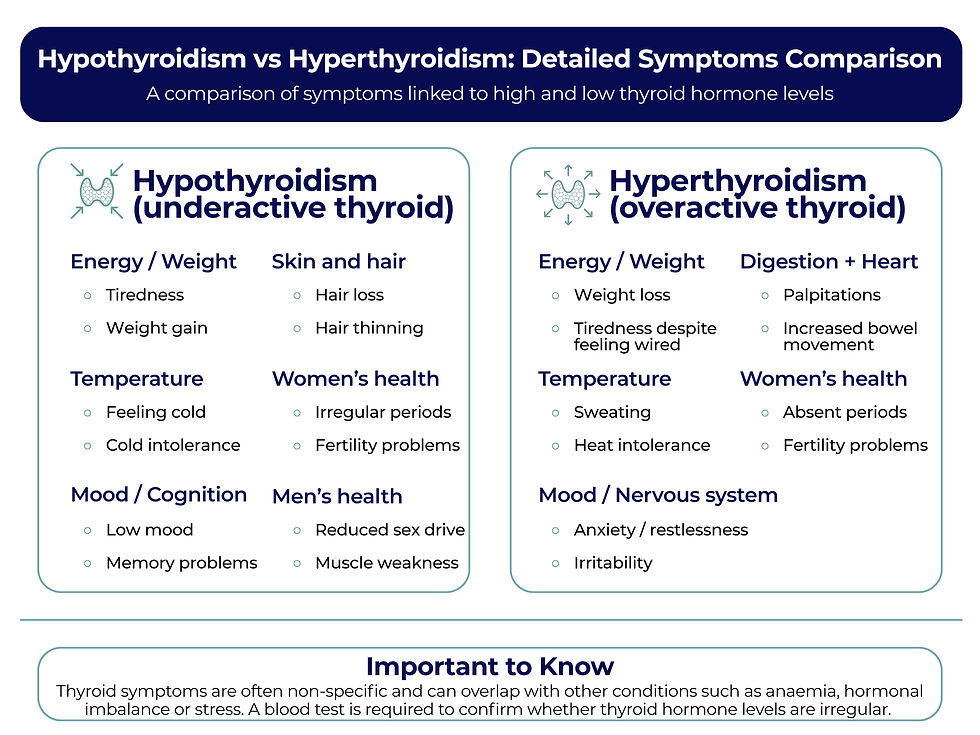
Thyroid imbalances can either be low or high. Generally, if the thyroid gland is high, the metabolism increases. People might lose weight, feel nervous, have a tremor, or have a fast heart rate. When levels are low, the reverse is true: fatigue, weight gain, slow digestion, or feeling cold.
Common signs of thyroid issues include3,4:
Fatigue or low energy
Weight gain or loss without a clear cause
Feeling unusually cold or hot
Heart rate changes or palpitations
Brain fog or poor concentration
Hair thinning or skin changes
Mood shifts (anxiety or low mood)
The problem is that many of these symptoms overlap with other conditions. Low energy, fatigue, or even skin and nail changes can be linked to iron deficiency anaemia.
Other Symptoms to Watch For In Women
Women may experience any of the general symptoms listed above. However, the thyroid gland plays a role in the menstrual cycle. You may notice5:
Irregular or heavy periods
Fertility issues
Worsening PMS
Hair loss or brittle nails
Increased sensitivity to cold
Breast tenderness
Changes after pregnancy
Both hyper- and hypothyroidism are linked to fertility problems and miscarriage. The main difference is in menstrual bleeding. Hyperthyroidism usually leads to absent or infrequent periods. If a period occurs, it’s often light or short. In contrast, hypothyroid periods are heavy and frequent (and can lead to further fatigue due to anaemia).
Other Symptoms to Watch For in Men
Male-specific signs of thyroid disease are less well recognised. Alongside characteristic symptoms like fatigue and weight changes, men might specifically notice:
Reduced libido
Erectile difficulties
Muscle weakness or loss
Unexplained weight changes
Low motivation or mood
Reduced stamina
Fertility problems
Like most thyroid symptoms, these problems can feel systemic. That means there is significant overlap with other conditions. It’s worth checking if your testosterone levels are low or if you’re experiencing male menopause.
What Causes Thyroid Issues?
Thyroid problems usually occur when the gland makes too little hormone (underactive) or too much hormone (overactive). The causes can overlap, but there are some familiar patterns doctors see repeatedly6,7.
Causes of an Under-active Thyroid
Most commonly, the immune system slowly attacks the thyroid gland (known as Hashimoto’s disease). It can also show up after thyroid surgery or radioactive iodine treatment, in the months after pregnancy, or because of certain medications. In the UK, low iodine intake is less common (but it can be a factor).
Causes of an Overactive Thyroid
An overactive thyroid is usually driven by another autoimmune condition (Graves’ disease), in which antibodies push the gland to produce too much hormone. It can also be linked to hormone-producing nodules, thyroid inflammation, taking too much replacement hormone, or high iodine intake from supplements or medical scans.
When to Speak to a Doctor?
Thyroid conditions are not something you can ignore. If you’re producing too much or not enough hormones, it won’t get better on its own and it can even get worse.
Often, people ignore symptoms such as weight gain, low mood, or persistent fatigue. But if you notice the symptoms occurring together alongside any of the other symptoms listed above, it’s worth getting checked.
Speak to your GP or book an appointment with a private clinic. They can organise a blood test to measure your thyroid hormone levels.
“It’s always a good idea to get checked if you’re experiencing symptoms of weight gain, fatigue, or low mood — especially if they’re not explained by lifestyle. It’s just a simple blood test.” - Dr Ravi Gowda
How Thyroid Problems Are Diagnosed
Diagnosing thyroid disease begins with a single blood test. Initially, your physician may perform a physical examination to look for the signs of thyroid issues. They’ll feel your thyroid gland to check if it’s enlarged or if there are any nodules.
The next step is a thyroid blood test. It may measure thyroid-stimulating hormone (TSH), T3, and T4 to determine whether levels are low or high8. Health Klinix offers a quick, affordable thyroid blood test. You’ll get tested in a private clinic and receive your results via a secure online portal. You’ll also receive personalised recommendations on how to stay healthy.
Depending on the results, a thyroid ultrasound scan or further testing may be necessary to help diagnose the cause of the condition.
Treatment Options for Thyroid Issues
Treatment depends on whether you have an underactive or overactive thyroid gland.
Underactive Thyroid (Hypothyroidism)
An underactive thyroid is relatively easy to treat with hormone replacement therapy. The most common medication is levothyroxine. It’s taken daily to return your thyroid levels to normal. Because it’s a natural part of the body, once the correct dosage is determined, most people don’t experience any side effects.
Overactive Thyroid (Hyperthyroidism)
Treating an overactive thyroid varies based on the cause. Antithyroid medication or radioiodine therapy can be used to either lower thyroid hormone production or destroy the cells that produce the hormone. In rare cases, surgery is necessary to remove parts or all of the thyroid gland.
Beta-blockers are sometimes prescribed to deal with a rapid heartbeat or tremors caused by high hormone levels.
Lifestyle Changes
Alongside medical treatments, lifestyle changes can alleviate symptoms. Eating unhealthily, not exercising, or not getting enough sleep can exacerbate weight gain, fatigue, and low mood in thyroid patients.
We recommend:
Prioritising good sleep and regular rest
Eating a balanced, nutrient-rich diet
Managing stress levels
Avoiding excessive iodine from supplements unless advised
Staying active with gentle, consistent exercise
Limiting alcohol and caffeine if they worsen symptoms
Why Early Intervention Is So Important
Thyroid issues can worsen over time — particularly in cases of overactive thyroid. But even without worsening symptoms, dealing with untreated thyroid issues can make everyday life more difficult. Low energy, low mood, weight gain, or fertility problems can have an impact on relationships, career prospects, and life outcomes.
The sooner you take action, the better your energy, mood, metabolism (and overall well-being) can be.
Health Klinix is a private clinic supporting patients in Coventry and the surrounding region. We offer professional, reliable thyroid function tests to help diagnose your condition. You’re not alone after you get your results. We can speak to your GP or provide personalised recommendations on the next best step. Book your thyroid function test today and get your results within 1-3 working days.
References
Your Thyroid Gland | British Thyroid Foundation
Thyroid: What It Is, Function & Problems | Cleveland Clinic
Thyroid Disease Symptoms: Signs of Thyroid Problems | Verywell Health
Signs and Symptoms of Hypothyroidism | Thyroid UK
How Thyroid Function Affects Your Period | Verywell Health
Managing Thyroid Disease in General Practice (2016) | Medical Journal of Australia
Written by:
Dr Joseph Nightingale, MBBS, MSc
Approved by:
Consultant in Infectious Diseases and Travel Medicine
MBBS, MRCP(UK), DTM&H, MRCGP, DCH, DRCOG, DFFP


Really informative article! I appreciated how clearly it explains the connection between thyroid problems, fatigue, weight changes, and mood. It also helped me understand why early diagnosis matters. I’ve also been learning about Thyroid RFA and found this article useful for understanding thyroid health.